
by Talking to Albertans
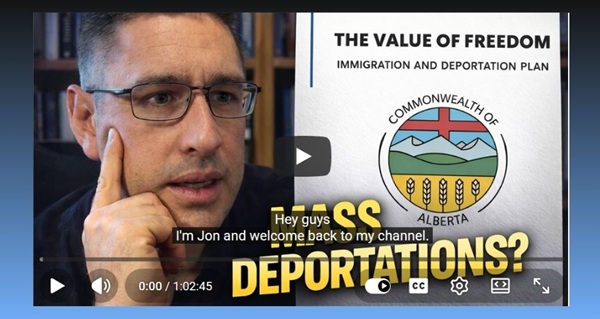
«In this episode, I read and respond to the “Immigration and Deportation Plan” section of The Value of Freedom, the Alberta Prosperity Project’s draft fiscal plan for an independent Alberta. This section lays out a points-based immigration system, reapplication requirements for current work permit holders and permanent residents, automatic deportation for non-citizens convicted of crimes with jail time, and a broader deportation framework that the document itself admits could carry legal, diplomatic, humanitarian, and economic costs.
In this video, I make it clear that I am strongly in favor of Alberta independence, BUT I AM NOT IN FAVOR OF MASS DEPORTATIONS. That is the real tension in this conversation. I support a sovereign Alberta having a strict, rational, economically focused immigration system going forward. I support a serious points-based model, I support tough consequences for criminality, and I support removing people who commit crimes or lie on immigration documents. But I do not support trying to retroactively uproot huge numbers of people who are already here, already working, already building lives who came under rules created by Canada.
That is where my commentary in this episode becomes especially important. I am not just reading this section. I am drawing a line between future policy and retroactive punishment. My position is that an independent Alberta should accept the demographic and legal reality it inherits, simplify the transition, and avoid creating a giant machinery of uncertainty, expense, bureaucracy, and human suffering. The document itself estimates potentially very large deportation volumes and significant annual deportation costs, while also warning of humanitarian backlash, economic disruption, and diplomatic strain.
I also push back against the idea of classifying Canadians differently based on whether they were born here or became citizens later. If you are a Canadian citizen, then you are a Canadian citizen. Period. In my view, we Albertans should not begin our new Republic by importing a tiered concept of citizenship. And if you are a Canadian citizen living in Alberta when independence happens, you should be offered citizenship in the Republic of Alberta immediately, not treated as somehow less legitimate because of where you were born. The draft document, by contrast, explicitly gives more points to “born, lifelong Canadians” than to naturalized citizens.
Where I do agree strongly is on the need for a firm system going forward. Alberta should have a strict points-based immigration model tied to economic need, real labour demand, and cultural seriousness. It should reward people who can contribute, enforce the rules honestly, and remove non-citizens who commit crimes. The draft section proposes a 2005-style points framework, reapplication for current permit and PR holders, and automatic deportation for non-citizens sentenced to jail time.
But I believe the smarter, more humane, and more realistic path is this: accept the population Alberta is handed at independence, honour financial obligations already created, protect peaceful people already living here, and build a simpler, stricter system from that point forward. That approach would strengthen Alberta morally, administratively, and diplomatically. It would also avoid weakening our negotiating position with Canada and other countries by turning independence into a spectacle of mass removals.
This is also why this discussion matters so much. The Value of Freedom is explicitly presented as a draft for public discussion, NOT A FINAL BLUEPRINT. That matters. The point of engaging this document on camera is not blind endorsement. It is to test the ideas, expose the weak spots, and push the public conversation toward something stronger, fairer, and more workable. The APP document itself says it is “Open for Public Discussion,” and that its purpose is to get these questions onto the table.
So this video is one of the most important in the series so far, because it gets at a deeper question: what kind of country would an independent Alberta actually be? A serious country needs borders, rules, and standards. But it also needs proportionality, clarity, and basic justice. If Alberta is going to become a Republic, we need to think through these issues carefully.»