
by Talking to Albertans
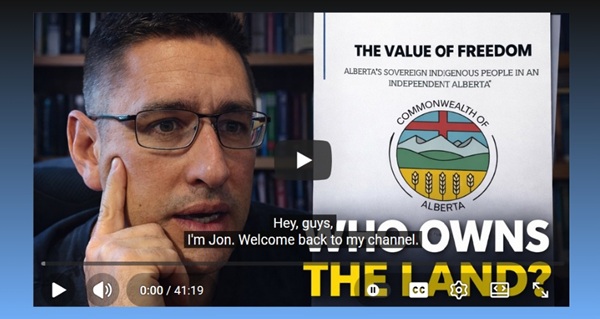
«In this episode of my ongoing series reading The Value of Freedom, I work through one of the most sensitive and controversial sections in the entire document: “ALBERTA’S SOVEREIGN INDIGENOUS PEOPLE IN AN INDEPENDENT ALBERTA.”
This part of the Alberta Prosperity Project’s draft fiscal plan says treaty rights must not be diminished and that any future constitutional arrangement would require negotiation with Alberta’s Indigenous Peoples. It then proposes a much broader restructuring: constitutionally protected Indigenous land ownership, possible transfer of additional Crown land, subsurface resource rights, Indigenous-led health and education systems, Indigenous policing, and major ongoing funding to support self-government and economic independence.
In this video, I do more than just read it. I stop repeatedly to think through what these ideas would actually mean in practice.
Where I agree:
I agree that this issue cannot be ignored in any serious discussion about Alberta independence. I agree that treaty rights, contracts, and legal obligations have to be treated seriously. I also agree with the broader principle that people should have more control over their own affairs, and I support ideas that genuinely move people out of dependency and toward ownership, responsibility, dignity, and long-term prosperity.
Where I object:
My biggest objection is that this section appears to move even further toward a system of permanently separate legal and political structures based on ancestry. I question whether expanding land transfers, creating separate institutions, and constitutionally entrenching more race-based distinctions would actually solve the underlying problems, or just deepen them. I also push back on the document’s assumptions around special governance arrangements, separate policing, government-funded housing, speculative economic projections, and the idea that simply allocating more money or more land automatically creates lasting self-sufficiency.
One of the deeper themes in this episode is this:
What does a fair settlement actually look like in an independent Alberta?
Do Indigenous nations keep their current arrangements with Canada?
Does Alberta take over treaty obligations?
Or should everything be renegotiated from the ground up in a way that respects existing obligations while aiming toward a future where all citizens ultimately live under one equal legal framework?
That is where this conversation gets difficult, and that is exactly why it matters.
This is one of the most candid videos I’ve made in this series. I’m thinking through the issue in real time, testing the logic of the document, and laying out where I think it raises serious moral, legal, political, and practical questions that Albertans need to wrestle with honestly.
Watch the video and tell me what you think:
Should an independent Alberta preserve the current treaty framework, replace it, or negotiate something entirely new?»