
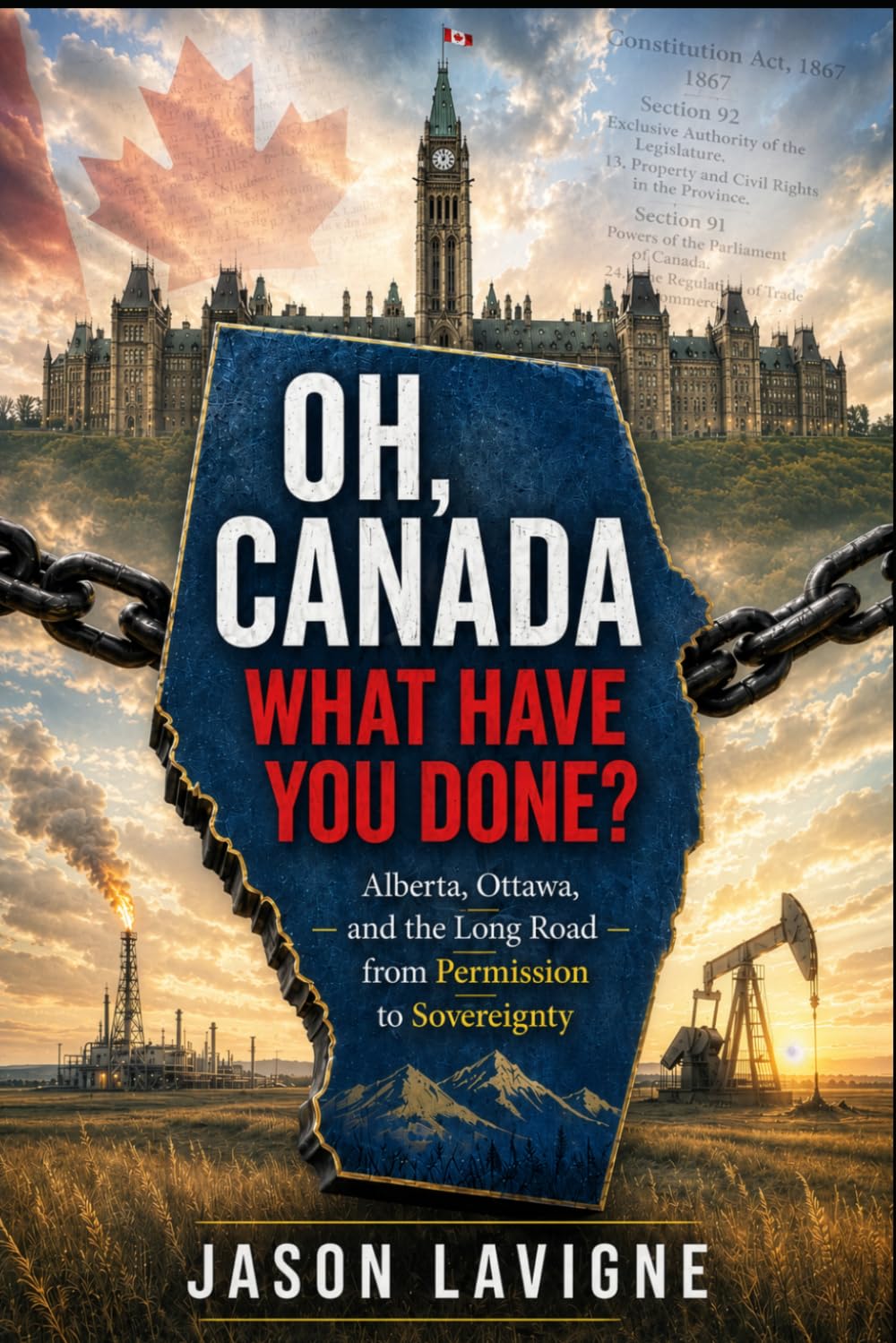
by Jason Lavigne
«Who truly controls Alberta’s future?
Alberta is often described as an equal partner in Confederation, but its history tells a more complicated story.
From the moment Ottawa created Alberta by federal statute in 1905, the province’s boundaries, institutions, natural resources, courts, policing, pipelines, finances, and constitutional powers have been shaped by decisions made beyond its control.
In Oh, Canada — What Have You Done?, Jason Lavigne presents a clear, accessible timeline of the laws, court decisions, political agreements, and federal interventions that defined Alberta’s relationship with Canada.
The story begins before Alberta had a legislature or a vote. It follows the province’s 25-year struggle to gain control of its own lands and resources, the devastating legacy of the National Energy Program, and the repeated battles over equalization, pipelines, carbon pricing, firearms, immigration, criminal law, Indigenous consultation, pensions, judicial appointments, speech, property, and federal emergency powers.
It also examines the moments when Ottawa helped Alberta, and asks why even those victories so often arrived as federal approvals, transfers, exemptions, agreements, or permissions.
This book explores:
Why Alberta entered Confederation without control of its own natural resources
How Ottawa became the gatekeeper for pipelines and access to international markets
Why Alberta administers laws, courts, policing, and public services that are often shaped elsewhere
How equalization, carbon policy, immigration, the CPP, and federal spending affect provincial autonomy
What the Emergencies Act, the Coutts prosecutions, online regulation, firearms restrictions, and new speech laws reveal about federal power
How treaties, First Nations rights, reserve lands, and the duty to consult affect Alberta’s future
What a successful sovereignty referendum would, and would not, legally accomplish.
Why the Supreme Court’s Quebec Secession Reference and the Clarity Act leave Alberta with a duty to negotiate, but no automatic right to leave
This is not simply a list of grievances, nor does it argue that every federal action has harmed Alberta. It is a documented examination of a deeper constitutional pattern:
Alberta is expected to accept responsibility for its future while the final authority over many of its most important decisions remains somewhere else.
Prosperity is not sovereignty. Consultation is not control. Permission is not freedom.
Before Albertans decide what comes next, they should understand how the present arrangement was built, and who still holds the keys.»